

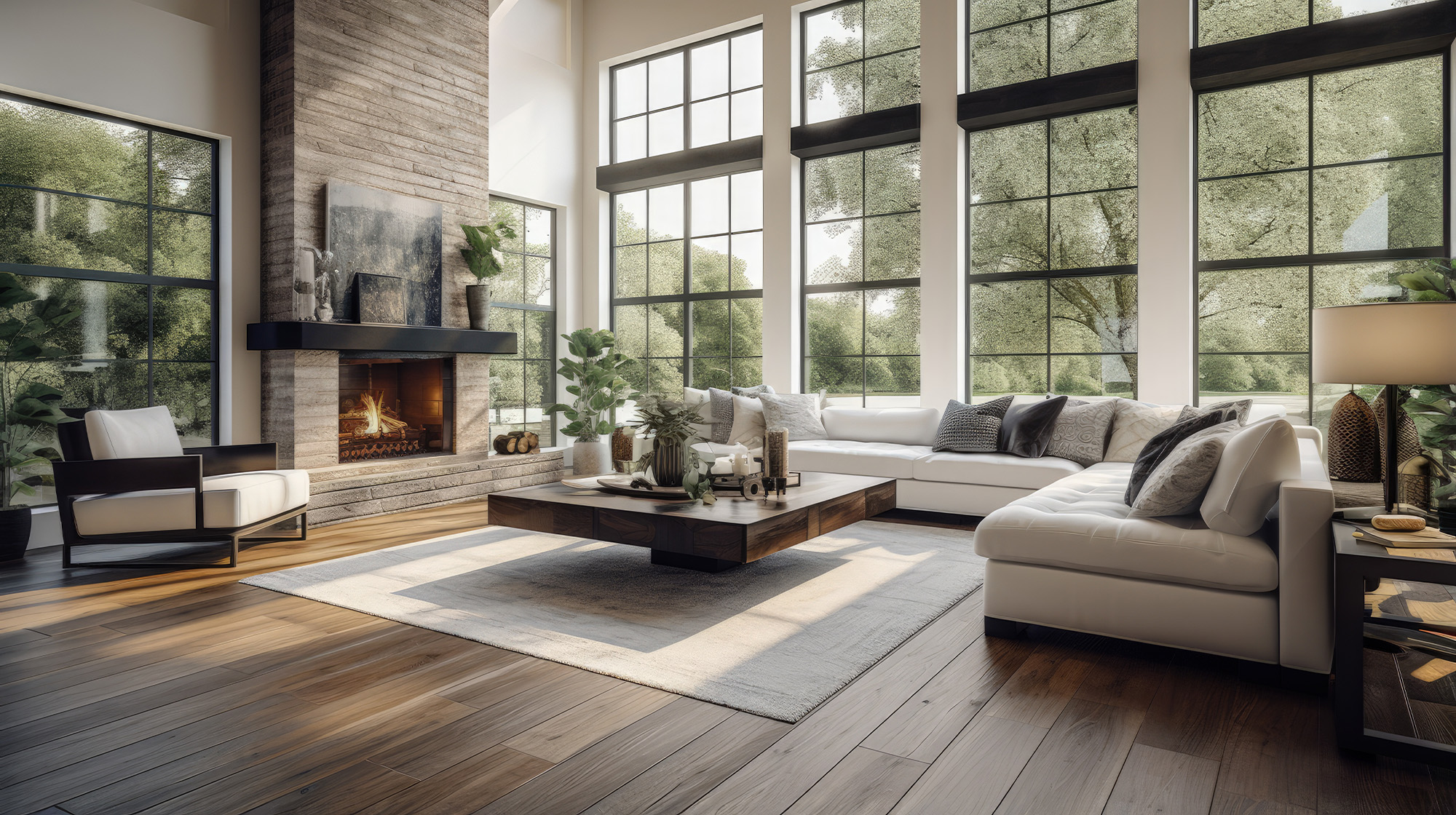
A busy household can be tough on hardwood flooring. Shoes, furniture, pets, kids, dropped objects, and the constant movement between the kitchen, living room, stairs, and entryway all leave their mark over time.
That does not mean you need to give up on hardwood. Choosing the right species can make a meaningful difference, particularly when you consider hardness, grain pattern, appearance, and how much everyday wear you want the floor to disguise.
For high traffic homes, hickory, maple, and oak are among the strongest places to start. The Janka hardness scale provides one useful comparison because it measures resistance to denting, although hardness is only one part of overall floor performance.
Hickory Is the Heavy-Duty Contender
If dent resistance is your first priority, hickory deserves a close look. With a Janka rating around 1,820 lbf, it is one of the hardest commonly used domestic hardwood species. That makes it a strong candidate for active homes with children, pets, and frequent foot traffic.
Hickory also has a naturally dramatic appearance. Its strong grain and variation between lighter and darker areas can help disguise small signs of daily use.
The trade-off is style. Hickory has more visual movement than many homeowners expect, so it works particularly well when you want a rustic, character-rich, or casual look. If your goal is a very uniform, understated floor, another species may be a better match.
Maple Offers Strength With a Clean Look
Hard maple has a Janka rating of roughly 1,450 lbf, putting it above red and white oak in hardness. Its creamy color and relatively subtle grain give it a much cleaner appearance than hickory. That combination makes maple appealing in contemporary interiors where you want durability without a heavily patterned floor.
There is a consideration when it comes to finishing. Maple's tight grain can make custom staining more challenging, so homeowners who want a particular color should discuss the finishing approach carefully. Prefinished maple can simplify that decision because the color and finish are established during manufacturing.
Oak Remains the Versatile Choice
Oak may not have the highest Janka rating, but it remains one of the most practical hardwood options for busy homes. White oak is around 1,360 lbf, while red oak is around 1,290 lbf. Both offer a useful combination of durability, availability, style flexibility, and proven residential performance.
White oak has become especially popular in current hardwood flooring trends in 2026 because its lighter, natural appearance works well with modern and transitional interiors. It also takes stain well, giving homeowners plenty of room to customize the final appearance.
Red oak is a strong option if you prefer warmer tones and more pronounced grain. It can also be an attractive choice when budget and traditional style are important considerations.
Don't Choose Hardwood by Janka Rating Alone
A harder species is better at resisting dents, but it does not make a floor immune to scratches or wear. Grain pattern, color, finish, plank design, and maintenance all influence how the finished floor looks after years of use.
For example, a pronounced grain can make small scratches less noticeable. A matte or low-sheen finish may also be more forgiving than a highly glossy surface in a busy household.
Your home's indoor conditions matter as well. Hardwood responds to changes in humidity, so proper installation and reasonable humidity control are important regardless of species. That becomes especially relevant in Northern Virginia, where homes experience humid summers and heated, drier winter interiors.
Match the Species to Your Lifestyle
For a household with large dogs, active children, and heavy traffic throughout the main level, hickory is a strong performance-first choice. For a clean contemporary aesthetic with good dent resistance, hard maple deserves consideration. For homeowners who want versatility, classic appeal, and a broad range of stains and finishes, white oak is often the most balanced starting point.
Hardwood installation is also about more than selecting a species. The flooring format, subfloor, finish, plank width, and installation method all need to work together. Current hardwood flooring trends in 2026 continue to favor natural-looking finishes, wider visual planks, and wood tones that feel warm and authentic.
When you're ready to compare hardwood flooring options for your home, Rachel's Floors can help you weigh durability, appearance, and installation requirements together. Contact us today and visit our showrooms at Manassas, VA to see hardwood options suited to homes throughout Northern Virginia and Alexandria, VA, Leesburg, VA, Warrenton, VA, and Gainesville, VA.


